Honestly, when money is tight, even a small payment update can feel like a “please, just tell me what’s happening” moment. If you’re trying to check your Benazir Income Support Programme (BISP) payment status, the good news is: you don’t need to run around offices for basic checking anymore.
In this guide, I’ll explain how to check your payment using your CNIC through the official 8171 system, what the messages mean, what to do if it says “not eligible” (even when you think you should be), and how to avoid the scams that pop up whenever people need help the most.
What does “8171” actually mean?
Think of 8171 like the program’s official “checking lane.” It’s used for:
- Eligibility checking
- Payment status checking
- Official SMS updates
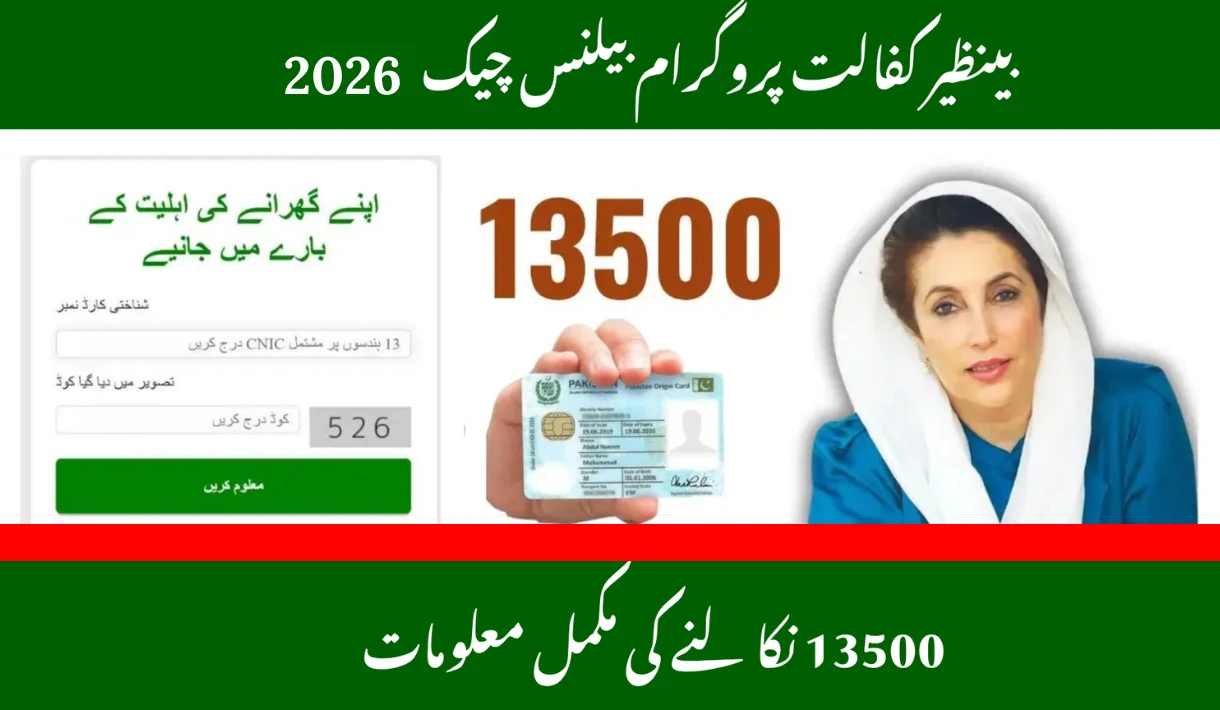
There’s also an official web portal where you enter your CNIC and a captcha code to view your status.
The most important thing first: use only official channels
Before we do any steps, here’s a rule that can save you from a bad day:
✅ Official messages come only from 8171
BISP has warned that official communication is only from 8171, and you should be careful with fake messages, fake “agents,” and random WhatsApp screenshots that promise “instant payment.”
✅ Official helpline (for complaints and guidance)
If someone demands a “fee” or you face illegal deductions, BISP asks beneficiaries to report it through their toll-free helpline 0800-26477.
(Yes, it’s toll-free. No, you don’t need to pay a “helper.”)
Latest updates for 2025 (quick and clear)
Here are the updates that mattered most in 2025 for many families:
1) Quarterly Kafalat payment increased (starting January 2025)
The Benazir Kafalat quarterly installment increased from Rs. 10,500 to Rs. 13,500 starting January 2025 (as announced by BISP leadership).
2) BISP continues supporting millions of families
BISP states it is providing cash assistance to around 9 million families under the Benazir Kafaalat programme.
3) “Dynamic registry” direction (why re-surveys matter)
BISP has been moving toward a dynamic registry, including registration desks at tehsil level, so records can be updated instead of staying frozen for years.
Benefits and advantages of checking online (instead of guessing)
Let’s be real—most people check because they don’t want surprises at the payment point.
Checking through the portal/SMS helps you:
- Confirm if your payment is released
- Avoid unnecessary travel costs
- Know if your record needs verification
- Reduce the risk of being tricked by a fake agent
- Spot issues early (expired CNIC, survey pending, biometric problems, etc.)
Basically: it saves time, money, and headaches.
Step-by-step: How to check BISP status online using CNIC (official portal)
This is the simplest method if you have internet.
What you need
- Your 13-digit CNIC number (no dashes)
- A phone or computer with internet
- A calm mood (because captchas test patience)
Steps
- Open the official 8171 web portal.
- Enter your CNIC (13 digits).
- Enter the captcha code shown on the screen.
- Submit and read the result.
That’s it. The portal is designed for eligibility/payment checking.
If the portal doesn’t open
Try these quick fixes:
- Refresh once (not 17 times like a panic-clicker).
- Try a different browser (Chrome/Firefox).
- Try off-peak hours (late evening often feels smoother).
- Turn off VPN if you’re using one.
- Make sure you’re on the correct official domain (scam sites often look “similar”).
Step-by-step: How to check via SMS (no internet needed)
No smartphone? No problem.
SMS method
- Open your Messages/SMS app
- Type your CNIC number (13 digits, no spaces, no dashes)
- Send it to 8171
- Wait for the reply
This is one of the most common and practical ways people check status from basic phones.
What the SMS reply usually tells you
It may show things like:
- Eligible / Not eligible
- Payment released / Payment not released
- Under verification / Survey required
If it’s unclear, don’t guess—use the official helpline for guidance.
Understanding your result (simple meanings)
Let’s decode common results in plain English.
“Eligible” / “Congratulations”
This usually means your household is considered eligible in the system. Next step: check whether the payment is released and where/how to collect.
“Payment Released”
Good news. Now focus on:
- collection method (bank/agent/camp point depending on your area)
- CNIC validity
- biometric verification readiness
“Under Verification” / “Verification Required”
This often means the system wants confirmation of something like:
- CNIC status
- family information
- survey data
- biometric matching
This is where many people need a tehsil-level desk / survey update (more on that below).
“Not Eligible”
This can be real, OR it can be caused by outdated data or missing updates. Don’t panic—first read the troubleshooting section because many “not eligible” cases are actually “record needs updating.”
How payments are usually given (and what to expect)
BISP runs multiple programs, but the most discussed one is Benazir Kafalat.
Benazir Kafalat (2025 amount)
- Rs. 13,500 per quarter (starting Jan 2025)
Other support programs (quick mention)
BISP also runs education-linked support like Benazir Taleemi Wazaif, which is for the education of children of active Kafalat beneficiaries up to higher secondary level. (Amounts and conditions vary, so always check your status through official channels.)
How to collect your payment without getting stressed
Once your payment shows “released,” collection usually depends on the payment setup in your area (banks/agents/camps).
Before you go to collect, do this checklist:
- ✅ CNIC is valid (not expired)
- ✅ Your name and CNIC match your identity records
- ✅ Your fingerprints are clear (sounds funny, but dry hands can fail biometrics)
- ✅ Take any message proof if you received an SMS (not mandatory everywhere, but helpful)
Important warning: never pay “fees” or accept deductions
BISP has clearly instructed beneficiaries to report anyone demanding deductions/fees, and to use the official helpline for complaints.
Dynamic survey and tehsil registration desks (why your record may need updating)
If your status is stuck, this section is usually the answer.
BISP has explained steps toward a dynamic registry, including Benazir Registration Desks at tehsil level, so families can be added or updated over time.
Who should consider updating through a tehsil desk?
You should seriously consider updating if:
- Your household information changed (marriage, children, address)
- CNIC expired and was renewed
- You were previously marked ineligible but your situation changed
- Your record shows “no data found” or “verification required”
Reality check: full registration is usually not “fully online”
The online portal is for checking. Actual data updates and verification commonly require visiting the relevant registration/survey desk, especially where biometrics or official record updates are needed.
Common mistakes to avoid (these cause 80% of problems)
Let’s save you time by avoiding the classic errors.
1) Typing CNIC with dashes or spaces
The system typically expects 13 digits only.
2) Using someone else’s SIM for SMS checking
Sometimes it still works for checking, but for payments/verification, mismatched ownership can create issues later. Use your own registered SIM where possible.
3) Falling for fake “8171 portals”
Scammers copy layouts and say things like:
- “Pay 500 rupees to unlock payment”
- “Enter ATM PIN for verification”
- “Send CNIC photo on WhatsApp”
Nope. Big nope. Official messages come from 8171 only, and official support is through BISP channels.
4) Paying an agent to “speed up” your status
BISP repeatedly warns against deductions/fees. If someone asks for money, report it.
5) Ignoring “verification required” for months
This is how payments get delayed or paused. If the system flags your record, treat it like a “to-do,” not like a “maybe later.”
Troubleshooting: real fixes for real problems
Here are the most common issues and what to do.
Problem: “No record found”
Try:
- Recheck CNIC digits (slowly)
- Use both methods (portal + SMS)
- If it still shows no record, it may mean you’re not in the current data set or your data needs an update through a registration desk.
Problem: “Eligible but payment not showing”
Possible reasons:
- Your payment phase hasn’t started in your area yet
- Backend update delay
- Verification pending
What helps:
- Check again after some days
- Ensure CNIC is valid
- If it stays stuck, call helpline for guidance.
Problem: Biometric verification failing at payment point
Try:
- Clean hands, dry hands, then try again
- If fingerprints are unclear, ask the payment point about the official process for repeated failures
- If anyone asks for money to “make it work,” report it immediately.
Problem: You got an SMS that looks suspicious
Red flags:
- It’s not from 8171
- It asks for a fee, OTP, PIN, or bank details
- It pressures you with “last chance today!”
Action:
- Don’t reply
- Don’t click anything
- Confirm via official portal/helpline.
A simple “safe routine” you can follow every quarter
If you want a stress-free habit, do this:
- Check your CNIC status on the official portal once near the expected payment window.
- If internet is not available, use SMS to 8171 (CNIC only).
- If “released,” plan collection with valid CNIC and patience.
- If “verification required,” don’t delay—update through the appropriate desk.
- If any deduction demand happens, report it on 0800-26477.
Conclusion
Checking your BISP status in 2025 doesn’t have to feel like a mystery game. The clean, safest approach is simple: use the official 8171 portal or SMS, keep your CNIC information updated, and don’t hand your personal details to random “helpers” who suddenly appear when payments are near.
If your status looks stuck, don’t assume it’s the end—many cases get fixed by updating records through the tehsil registration setup, especially as BISP moves toward a more dynamic registry.
You’ve got this. And if the system is confusing, remember: confusion is normal… but paying a scammer is optional. (So let’s not do that.)
FAQs (Quick Answers)
1) What is the easiest way to check BISP payment status in 2025?
Use the official 8171 web portal if you have internet, or send your CNIC by SMS to 8171 if you don’t.
2) What is the Benazir Kafalat payment amount in 2025?
BISP announced the quarterly Benazir Kafalat installment increased to Rs. 13,500 starting January 2025.
3) I got a message from a different number claiming it’s BISP. Is it real?
Be careful. BISP has stated official communication is only from 8171. If it’s not 8171, treat it as suspicious.
4) Someone is cutting money from my payment. What should I do?
That’s not okay. Report deductions using the BISP toll-free helpline 0800-26477.
5) Why does my status say “verification required”?
It usually means your record needs an update/confirmation (CNIC, survey data, household info). BISP has been moving toward a dynamic registry with tehsil-level registration desks for updates.
6) Is full BISP registration available online?
The portal is mainly for checking. Updates and full verification commonly require official in-person steps, especially where biometric/record updates are needed.