Introduction
Well, if you’ve ever wondered whether you or someone in your family qualifies for financial help under Pakistan’s Benazir Income Support Programme (BISP), you’re definitely not alone. Millions of people search every year to understand the system, the rules, and—most importantly—how to check their eligibility without running from office to office.
That’s where the option to check BISP eligibility online 8171 comes in handy. It’s simple, free, and saves a lot of time (and stress). In this guide, I’ll walk you through everything you need to know for 2025—slowly, clearly, and without confusing terms. Imagine we’re sitting together, having chai, and I’m explaining it step by step.
Whether you’re checking for yourself, your parents, or helping a neighbor, this article is written to make things easy for everyone.
What Is BISP and Why Does It Exist?
Before jumping into eligibility checks, let’s quickly understand what BISP actually is.
The Benazir Income Support Programme is a government-run financial assistance program. Its main goal is simple:
to support low-income families so they can manage basic needs like food, education, and healthcare.
BISP mainly focuses on:
- Families living below the poverty line
- Widows and women-led households
- People with disabilities
- Families with no stable source of income
Instead of giving random aid, BISP uses a data-based system to make sure help reaches the people who truly need it.
Why the 8171 System Matters So Much
Honestly, life became much easier after the introduction of the 8171 system.
Earlier, people had to:
- Visit offices multiple times
- Stand in long lines
- Deal with unclear answers
Now, with the 8171 service, most of the basic checks can be done:
- From home
- On a simple mobile phone
- Without paying any fee
This system connects your information with national records and tells you whether you qualify or not.
Latest BISP Updates for 2025 (Important!)
Let’s talk about what’s new this year, because outdated information can cause unnecessary confusion.
Key Updates You Should Know
- BISP has improved its data verification system
- NADRA-linked records are checked more strictly
- Priority is being given to women beneficiaries
- New surveys are being conducted to update family data
- SMS responses from 8171 are clearer and faster
If someone checked eligibility years ago and was marked “not eligible,” that doesn’t always mean the same result applies in 2025.
Situations change. Policies improve. That’s why rechecking matters.
Who Can Qualify for BISP in 2025?
Let’s keep this simple and clear.
You may qualify if:
- Your household income is very low
- You don’t own valuable property or land
- No one in your household has a high-paying government job
- You are a widow or head of household (especially female-led)
- You or a family member has a registered disability
You are less likely to qualify if:
- You own large land or commercial property
- You travel abroad frequently
- You pay high utility bills consistently
- You are already receiving other major government benefits
Eligibility is decided using a poverty score, not just one single factor.
How the Poverty Score Works (Explained Simply)
A lot of people hear about “poverty score” and get confused. Let’s break it down in plain words.
The poverty score is calculated using:
- Family size
- Monthly income
- Type of house (mud, brick, rented, owned)
- Education level
- Employment status
- Utility usage
Each answer adds or subtracts points.
Lower score = higher chance of eligibility.
You don’t need to calculate it yourself. The system does it for you automatically.
Step-by-Step: How to Check Eligibility Using 8171
Now let’s get to the part everyone is here for.
Method 1: Check via SMS (Most Popular)
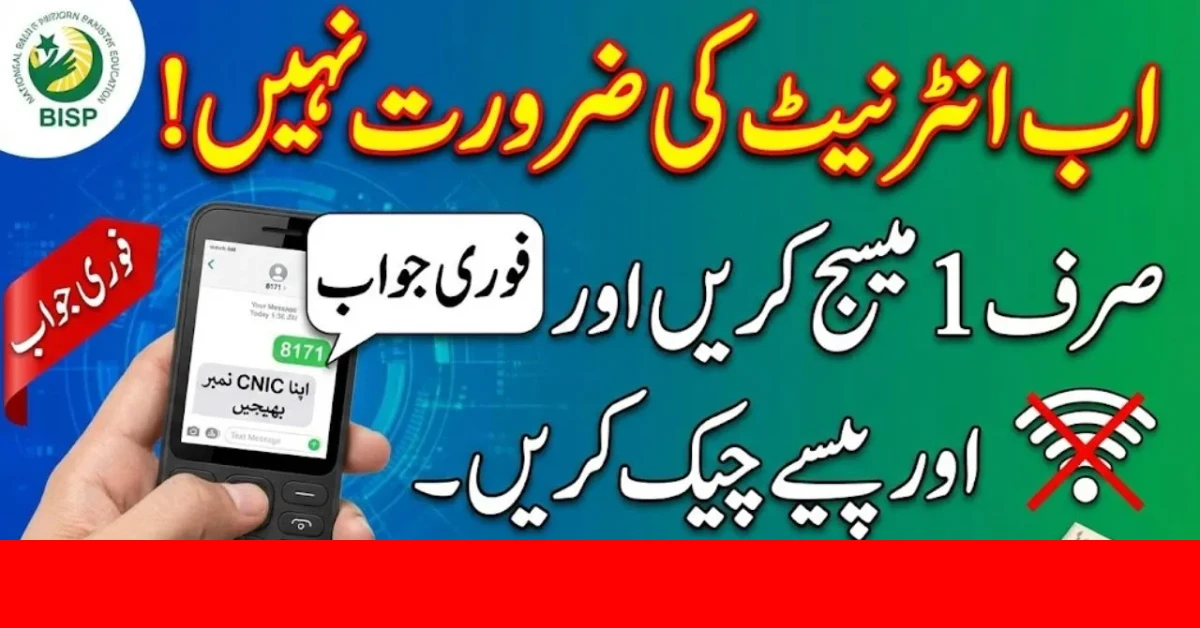
This is the easiest method and works on any mobile phone.
Steps:
- Open your phone’s message app
- Type your 13-digit CNIC number (without dashes)
- Send it to 8171
- Wait for a reply SMS
Within a short time, you’ll receive a message telling you:
- Eligible
- Not eligible
- Or under verification
That’s it. No forms, no charges, no long process.
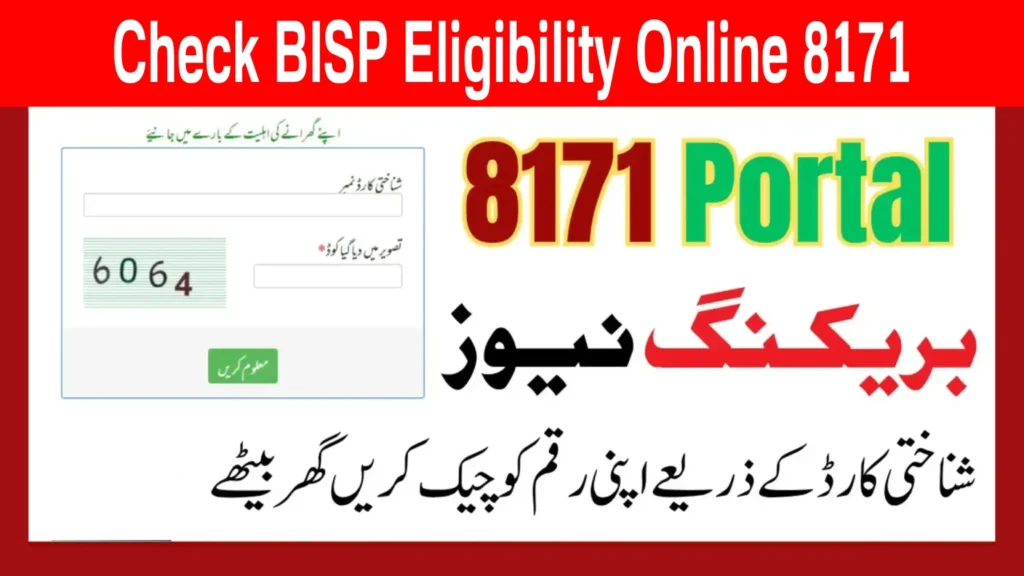
Method 2: Online Check Through Official Portal
For people who prefer internet access.
What you need:
- CNIC number
- Internet connection
- Mobile or computer
Steps:
- Enter your CNIC number
- Complete the simple verification
- View your eligibility status
This method is helpful if:
- SMS reply is delayed
- You want to double-check status
- You are helping someone else
Common SMS Responses and What They Mean
Sometimes people panic after reading the SMS. Don’t worry—here’s what they usually mean.
“You Are Eligible”
Good news!
You qualify and may receive payments or instructions soon.
“You Are Not Eligible”
This doesn’t mean “never.”
It means based on current data, you don’t qualify. Updating information can change this.
“Under Verification”
Your data is still being checked.
This often happens after surveys or record updates.
What to Do If You Are Not Eligible
Honestly, this is where most people give up—but you shouldn’t.
Smart Steps to Take
- Check if your CNIC data is updated at NADRA
- Make sure family details are correct
- Participate in the next BISP survey
- Visit a BISP office if instructed
Many families become eligible after updating records, especially after changes like:
- Death of a family earner
- Job loss
- Disability registration
Benefits of Checking Eligibility Online
Let’s be real—this system has saved people a lot of headaches.
Major Advantages
- No travel needed
- Free of cost
- Works 24/7
- No agent or middleman
- Quick and reliable
Plus, it reduces the chances of fraud and misinformation.
Common Mistakes People Make (Avoid These!)
You’d be surprised how small mistakes cause big delays.
Mistakes to Watch Out For
- Sending CNIC with dashes
- Using someone else’s CNIC by mistake
- Ignoring verification messages
- Falling for fake SMS or calls
- Paying agents (BISP is always free)
If someone asks for money to “make you eligible,” that’s a red flag.
How Women Benefit More Under BISP
One of the strongest parts of BISP is its focus on women.
Why Women Are Prioritized
- Payments are issued in women’s names
- Female-led households get extra consideration
- Helps improve family nutrition and education
- Encourages financial independence
In many cases, even if men in the family are unemployed, registering the woman as beneficiary improves eligibility chances.
Payment System Explained in Simple Words
Once eligible, people often ask: “How will I get the money?”
Payment Methods Include
- Designated payment centers
- Partner banks
- Biometric verification
You’ll always receive official instructions before any payment.
No random calls. No secret steps.
How Often Should You Recheck Eligibility?
Good question—and an important one.
You should recheck:
- Once every few months
- After updating CNIC information
- After participating in a new survey
Rechecking doesn’t harm your record. It keeps you informed.
How BISP Helps Beyond Cash
BISP isn’t just about money.
Additional Support Programs
- Education stipends for children
- Health and nutrition support
- Emergency relief during crises
These programs often require separate registration, but eligibility usually starts with BISP.
My Honest Advice as a Blogger
If I had to give one piece of advice, it would be this:
Don’t rely on rumors or “someone who knows someone.”
Always trust official messages and systems.
Take five minutes. Send the SMS. Check the status.
That small step can make a real difference.
Conclusion
So there you have it—a complete, no-confusion guide to understanding BISP eligibility in 2025. The system may seem intimidating at first, but once you break it down, it’s actually quite simple.
If you or someone you care about needs support, checking eligibility is the first and most important step. Stay patient, keep your information updated, and never pay anyone for something that’s meant to be free.
Sometimes, a single SMS can open the door to much-needed help. And that’s always worth trying.
Frequently Asked Questions (FAQs)
1. Is the 8171 service free to use?
Yes, completely free. You should never pay anyone for eligibility checks.
2. Can I check eligibility for someone else?
Yes, as long as you have their correct CNIC number and permission.
3. How long does verification usually take?
It varies. Some responses are instant, while others may take a few days.
4. What if my phone doesn’t receive SMS replies?
Try again later or use the online method to check your status.
5. Can eligibility status change over time?
Yes. Changes in income, family size, or records can affect eligibility.
6. Is BISP only for women?
Women are prioritized, but eligibility depends on household conditions.